The Peacock’s Appointment with the Infinite
We wait for the right moment, the perfect pill. Like the peacock, this essay is about keeping your appointment with the infinite - now.
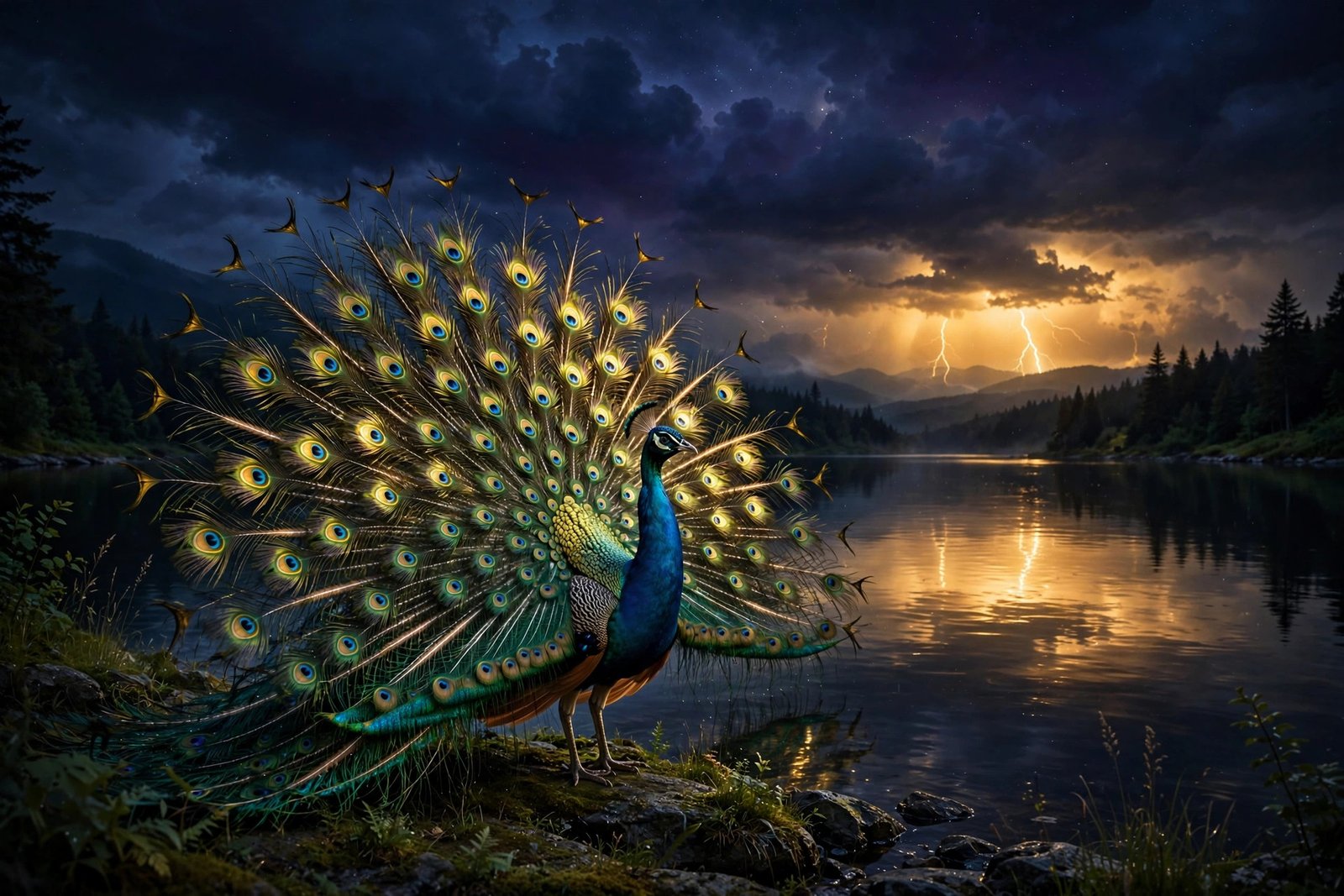
Now, you see, there is a marvelous little story told by a certain nineteenth-century mystic about a man and a peacock. It seems this man had a rather peculiar habit of feeding a peacock a pill of opium every afternoon at exactly four o’clock. And, as you might expect in this grand, repetitive game we call nature, the peacock became quite fond of the arrangement. By the very next day, the bird was there on the dot, waiting for its dose. It had tasted a certain intoxication, a certain shift in consciousness, and it simply couldn’t help but return to the source.
We laugh at the peacock, of course. We think, “What a silly bird, being so predictably hooked on a chemical.” But if we look into the mirror of our own lives with a bit of a twinkle in our eye, we realize that we are all, in one way or another, that peacock. We are all waiting at the gate at four o’clock for our particular brand of “opium.”
The Multiplicity of Hooks
When we find something we like, the very nature of the human organism is to say, “More, please!” We see this in the life of a young man named Mahendra, who visited this same mystic and was so utterly captivated by the wisdom he heard that he couldn’t stay away. He went back a second time, a third, a fourth. He was “counting the minutes,” as he put it. He was intoxicated by the presence of a realized being.
But let’s look at the darker side of this for a moment. We talk today about “crises” and “epidemics” of addiction, where millions are trapped in a cycle of dependency on physical substances. We treat this as a modern medical failure, but the truth is far more fundamental. Everything – and I mean everything – has the potential to be addictive. You don’t have to be a junkie in an alleyway to be an addict. You might be a junkie for your morning coffee, or for the morning newspaper, or for the constant “buzz” of your digital devices.
You see, we don’t usually call these things addictions because they are “harmless.” We enjoy our shopping, our sports, our movies, and our little social media fixes. But have you ever noticed the sheer amount of time and energy we invest in these things? We are essentially pouring our life-force into external objects, hoping they will give us a permanent sense of “okay-ness.”
The Fragile Architecture of “Mine”
The problem with this arrangement is that when you depend on anything outside of yourself for your happiness, you have effectively signed away your freedom. You have made yourself a prisoner of circumstances. There is a fundamental law in this universe: what comes, must go. Everything that is “put together” will eventually fall apart. If your joy is tied to your cigarettes, or your career, or your favorite team, or even your favorite person, you are living on a knife-edge. The moment you are separated from the source of your joy, misery is the result.
Most of us don’t experience this as a massive tragedy every day. Instead, it’s a series of “minor” disappointments – annoyances, regrets, and little sorrows that eventually add up until they form a heavy cloud over our lives. We try to outrun this cloud by hunting for new distractions, new “pills,” but it’s a losing battle. Eventually, we just waddle through life, pretending to be happy while actually living in a state of quiet desperation.
The Higher Addiction
So, what is the alternative? If we are biologically “wired” to get attached to things, perhaps the trick is not to stop being an addict, but to acquire a “good addiction.” Now, that sounds like a bit of a hoax, doesn’t it? A contradiction in terms. But bear with me.
Imagine getting addicted to the search for the center. Imagine being “hooked” on the practice of reflection, quietude, and selfless service. This is what we call the spiritual life. It starts with a bit of curiosity – you read about the joy of a saint or a mystic and you think, “I’d like a sip of that.” So you start to study, you start to meditate, and you begin to invest your time there instead of in the “shallow” addictions.
A fascinating thing happens. As you begin to experience a real, internal joy – a joy that doesn’t depend on the “four o’clock dose” – your other addictions start to suffocate. They simply don’t have the room to grow anymore. You are shifting the “opium” from the outside to the inside.
The Vanishing Act
The deeper you go into this “spiritual addiction,” the more the distance between you and the Ultimate Reality begins to shrink. It’s like two people walking toward each other on a narrow bridge. Eventually, they get so close that they can no longer be “two.” The “me” and the “God” or the “me” and the “True Self” begin to merge.
And what remains when the “two” vanish? This is the point where words fail us completely. When everything has become the Self, who is there to see, and what is there to be seen? Who is there to hear, and what is there to be heard? When you have realized that you are the entire works – the infinite being, the pure consciousness, the absolute bliss – the need for addiction disappears. The peacock is no longer a peacock; the opium is no longer opium. The “name and form” of the bird have dissolved into the ocean of the infinite.
The Ticking Clock
But here we are, still in the world of “names and forms,” still feeling like separate individuals. And we have to be honest: we are going to get attached to things. It’s almost impossible not to. So, the wise thing to do is to take a very cold, hard look at our current habits.
The clock is ticking. Every day we move a bit closer to the end of the show. We are aging, and the “stop” button can be pressed at any moment without warning. Is it really worth spending your precious energy on things that are guaranteed to be taken away?
The real wisdom is to divert your “addictive” energy toward a life that has no hangover. We need to find that internal “opium” that leads not to a deeper sleep, but to a total awakening. We need to find the addiction that ultimately sets us free.